
You check your claim status on VA.gov. It says CLOSED. You scroll down looking for a decision letter. There isn’t one. No rating. No explanation. Just closed.
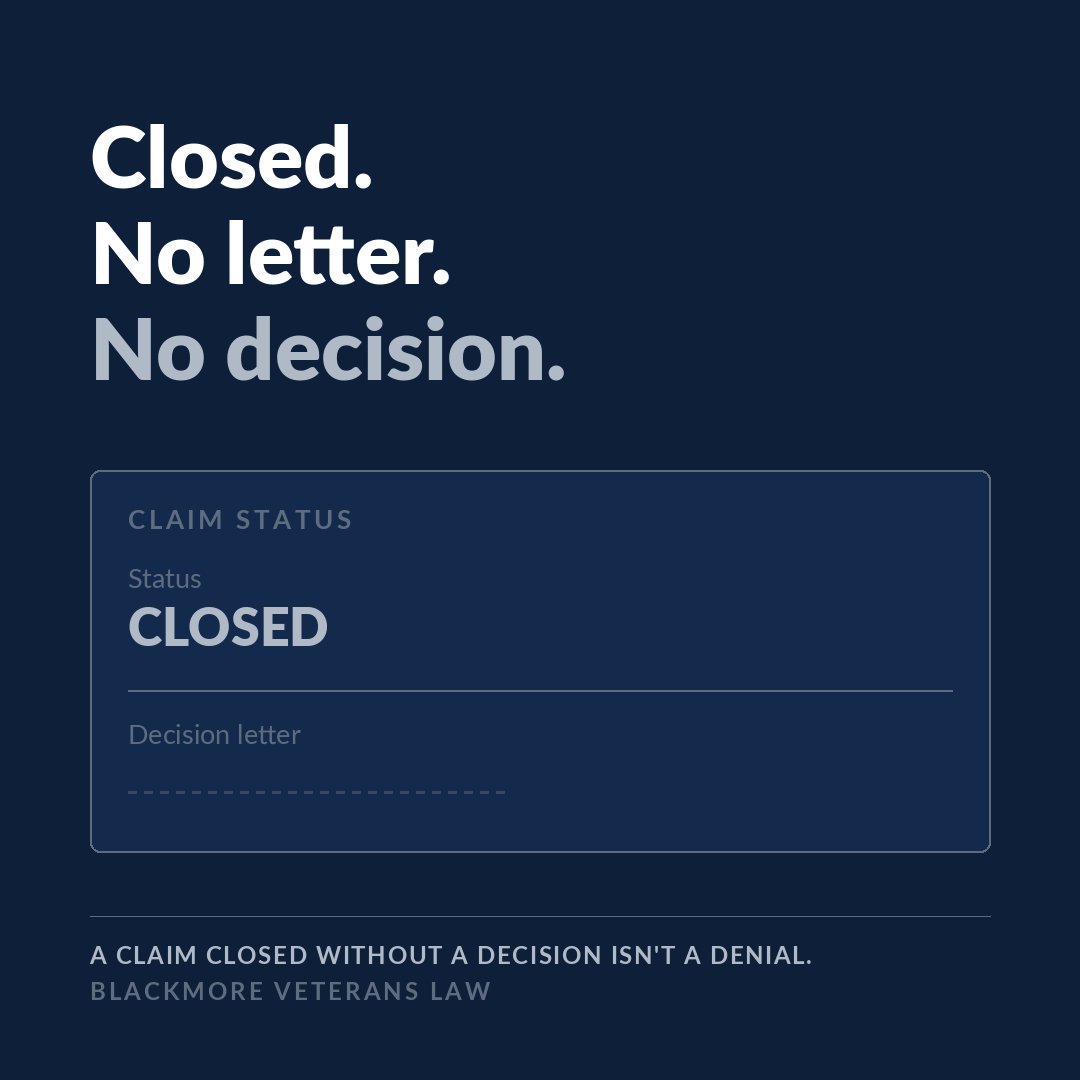
This happens more than most veterans know, and it is not the same thing as a denial.
A claim closed without a decision is a procedural closure. It usually means the VA ended the claim for administrative reasons before ever reaching the merits. That distinction matters enormously, because the legal remedies available to you depend entirely on why the claim was closed and what kind of closure it was.
Why the VA Closes Claims Without Deciding Them
There are several reasons a claim can be marked closed without a rating decision ever being issued.
Missed C&P exam. If the VA scheduled a Compensation and Pension examination and you didn’t show up, and couldn’t show good cause for the absence, the VA may close the claim based on the existing record. In many cases that record isn’t sufficient to grant the claim, so it closes without a favorable decision and sometimes without any decision letter at all.
Failure to respond to a VA development letter. The VA sometimes sends requests for additional evidence or information. If you don’t respond within the stated timeframe, the claim may be closed without adjudication.
Withdrawn claim. If someone at the VA recorded a withdrawal of the claim, intentionally or otherwise, it will show as closed. This sometimes happens in error.
Administrative closure during a pending appeal. During the transition to the Appeals Modernization Act system, some legacy claims were closed or transferred in ways that left veterans without a clear decision letter.
Technical or processing errors. The VA’s claims processing system is large and imperfect. Some closures are simply mistakes.
A Closure Is Not a Denial
This is the critical legal point.
A denial is a formal rating decision. It has to be in writing, it has to state the reasons the VA denied the claim, and it triggers a specific one-year window to appeal. A procedural closure is none of those things. It doesn’t start the appeal clock running. It doesn’t constitute a final decision on the merits. And in many cases, it can be corrected without losing your original effective date.
That effective date matters because it determines how far back your retroactive benefits go if the claim is eventually granted. Veterans who think a closure is the end of the road sometimes wait years before seeking help, losing thousands of dollars in back pay they were entitled to all along.
What You Can Do
Request your complete claims file. File a request for your C-file through the VA. The C-file contains every document the VA has associated with your claim, including internal notes, development letters, exam orders, and processing records. Understanding exactly what happened and why the claim was closed is the starting point for figuring out what to do next.
Determine whether a decision was actually issued. Sometimes a decision letter was generated but never received. The VA is required to notify you of decisions in writing. If a decision was issued and you never received it, that may provide grounds to reopen the appeal period.
Reopen the claim with new evidence. If the closure was procedural and no decision was ever issued, you may be able to file a Supplemental Claim with new and relevant evidence and preserve an earlier effective date, depending on the circumstances.
Challenge a closure based on VA error. If the claim was closed because of a VA processing error or a failure on the VA’s part to fulfill its duty to assist, that error can be raised in a Supplemental Claim or a direct appeal.
Act quickly regardless. Even though a procedural closure doesn’t trigger the standard one-year appeal window the way a denial does, delay still hurts you. Records get harder to obtain. Evidence gets stale. And every month that passes is a month of potential back pay you may not recover.
The Practical Reality
Veterans dealing with a closed claim and no decision letter are often in limbo. The VA’s online tools show a closed status but provide no path forward. Phone calls to the VA frequently result in conflicting information. The paperwork needed to sort out what actually happened can take months to obtain.
This is exactly the kind of situation where having an attorney look at the file makes a concrete difference. The question of whether your claim can be reopened, whether your original effective date can be preserved, and what lane of appeal makes the most sense are all legal questions. The answers depend on the specific facts in your C-file.
If your claim shows closed and you have no decision letter, don’t assume the process is over. It may be just beginning.
Bryan R. Blackmore is a veterans law attorney, VA-accredited attorney, and former Attorney at the Board of Veterans’ Appeals. He served 24 years in the U.S. Coast Guard, including a deployment to Baghdad during Operation Iraqi Freedom. Mr. Blackmore is licensed in California and Virginia and represents veterans nationwide through Blackmore Veterans Law, P.C.